 Photo: David Newman
Seattle is Built on Native Land
We acknowledge that we live and work on the unceded, traditional territories of the Coast Salish peoples, whose ancestors have lived here and cared for these lands and waters since time immemorial. This acknowledgment does not take the place of authentic relationships with Indigenous communities, but serves as a first step in honoring the land we are on. These communities are still here, and many Indigenous people are strong and thriving. We honor the people past and present who belong to this place.
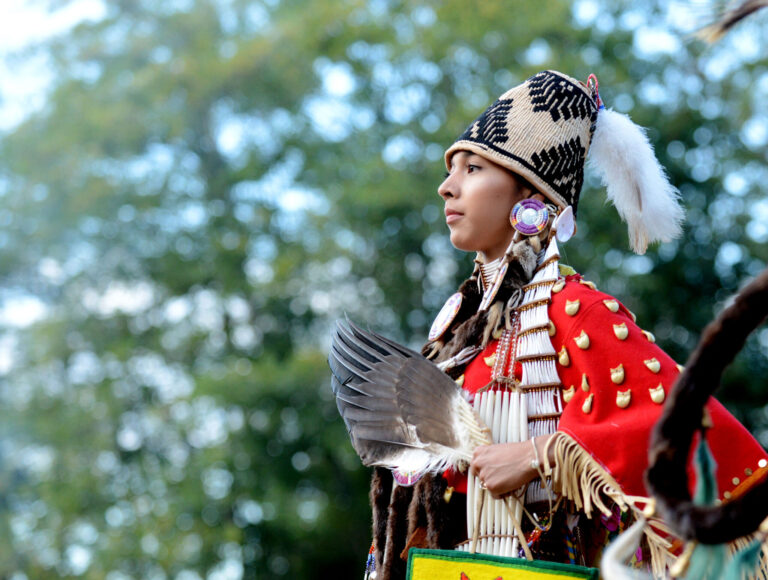 courtesy Seafair Indian Days Powwow
Seattle is the only major city named for a Native American chief. Recognized as a leader of the Suquamish and Duwamish people, Chief Seattle is known as Chief Si?al in his native Lushootseed (historically known as Puget Sound Salish) language. In fact, many of Seattle’s communities and landscape features have Lushootseed names. In addition to the city which bears his name, Chief Seattle’s most enduring legacy is his 1854 speech, which includes, “Every part of this country is sacred to my people. Every hillside, every valley, every plain, and grove has been hallowed by some fond memory or some sad experience of my tribe.” There are over 14,000 Native citizens who call Washington home; some of the Native tribes around Puget Sound include the Muckleshoot, Puyallup, Snoqualmie, Suquamish, and Tulalip Nations.
Washington state is home to 29 federally recognized Indigenous tribes, including the Muckleshoot, Puyallup, Snoqualmie, Suquamish, and Tulalip Nations. Tribes are committed to preserving Indigenous culture; engaging with the community through events, museums, and cultural centers; and protecting natural resources. The Puget Sound remains a vital source of marine life for the tribes along its coast.
In 2014, the Seattle City Council designated the second Monday in October as Indigenous Peoples Day, reaffirming the city’s commitment to promote the well-being and growth of Seattle’s American Indian and Indigenous community. This includes the legacies of artists, writers, and activists like Bernie Whitebear, Marvin Oliver, Colleen Echohawk-Hayashi, and more.
Explore Arts & Culture
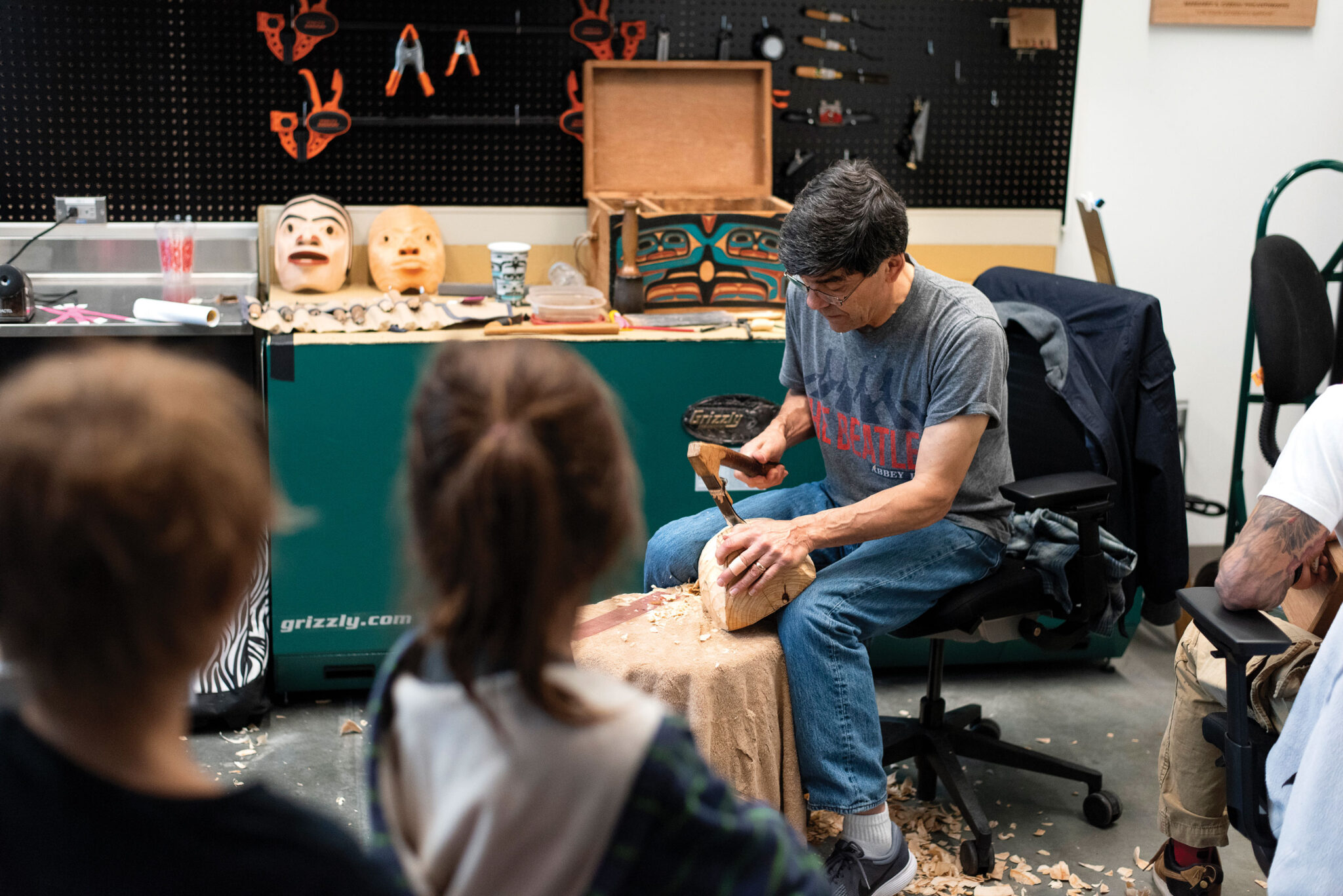
courtesy Burke Museum
Burke Museum
The Northwest Native Art Gallery at the Burke Museum includes an exhibit by six Pacific Northwest Native artists from across the region. Here, you’ll find permanent displays of Indigenous objects such as house posts, totem poles, and a 35-foot canoe. Admission is free on the first Thursday of the month.
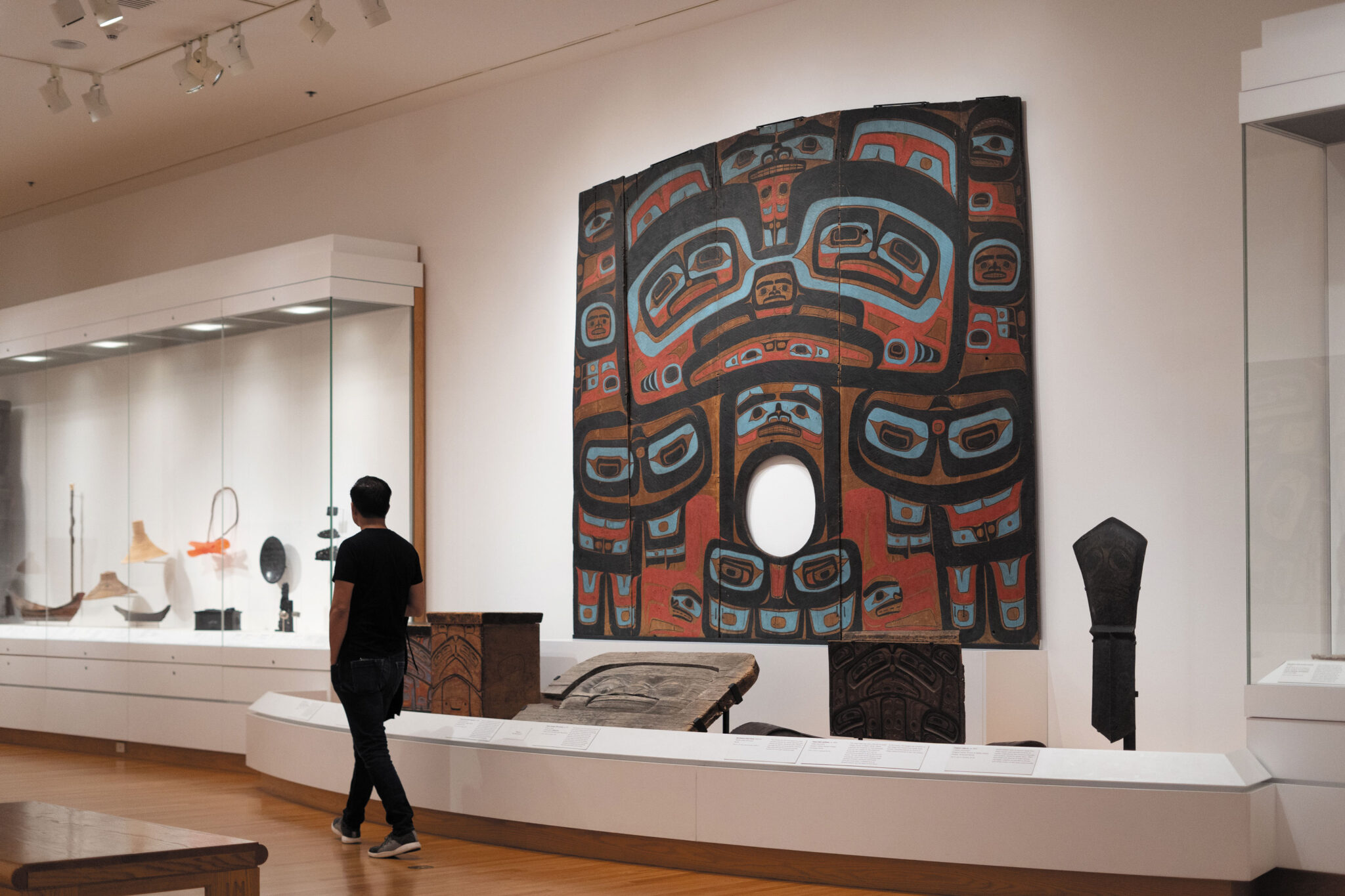
SAM photo: Chloe Collyer
Seattle Art Museum (SAM)
Numerous pieces by Native artists are on display in SAM’s collection of Northwest Coast art at the Seattle Art Museum, which showcases the way Indigenous people have shaped the region as stewards of the water, forests, valleys, and mountains through pieces like woven baskets, sculptures, regalia, and more. Admission is free on the first Thursday of the month.
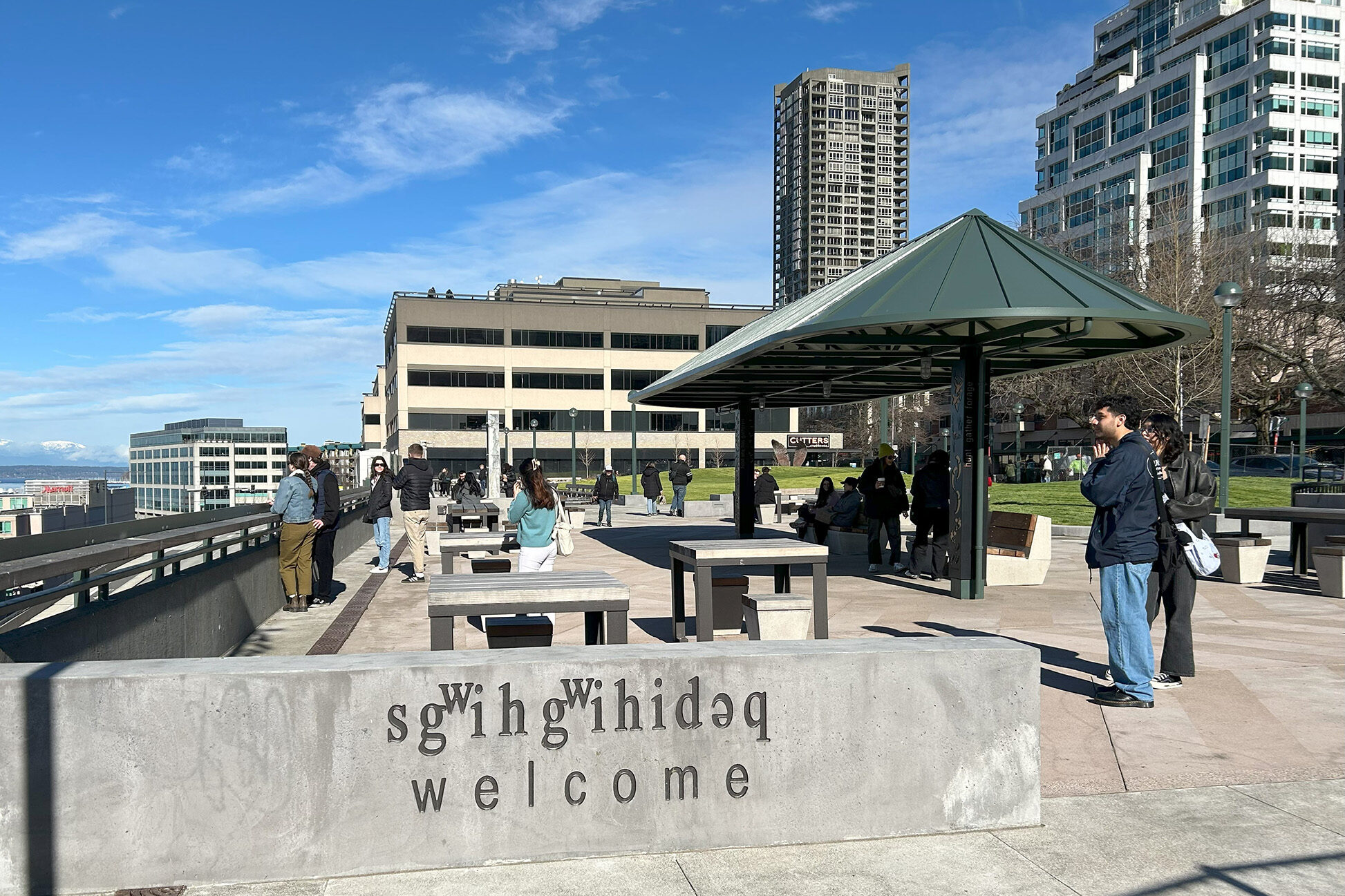
Photo: Seattle Parks and Recreation
Victor Steinbrueck Park
Located steps away from the north end of Pike Place Market, Victor Steinbrueck Park is a popular spot to picnic, nosh on market fare, and enjoy views of the Puget Sound. The park’s name honors Steinbruek’s commitment to historical preservation and advocacy for open urban spaces that everyone can use.
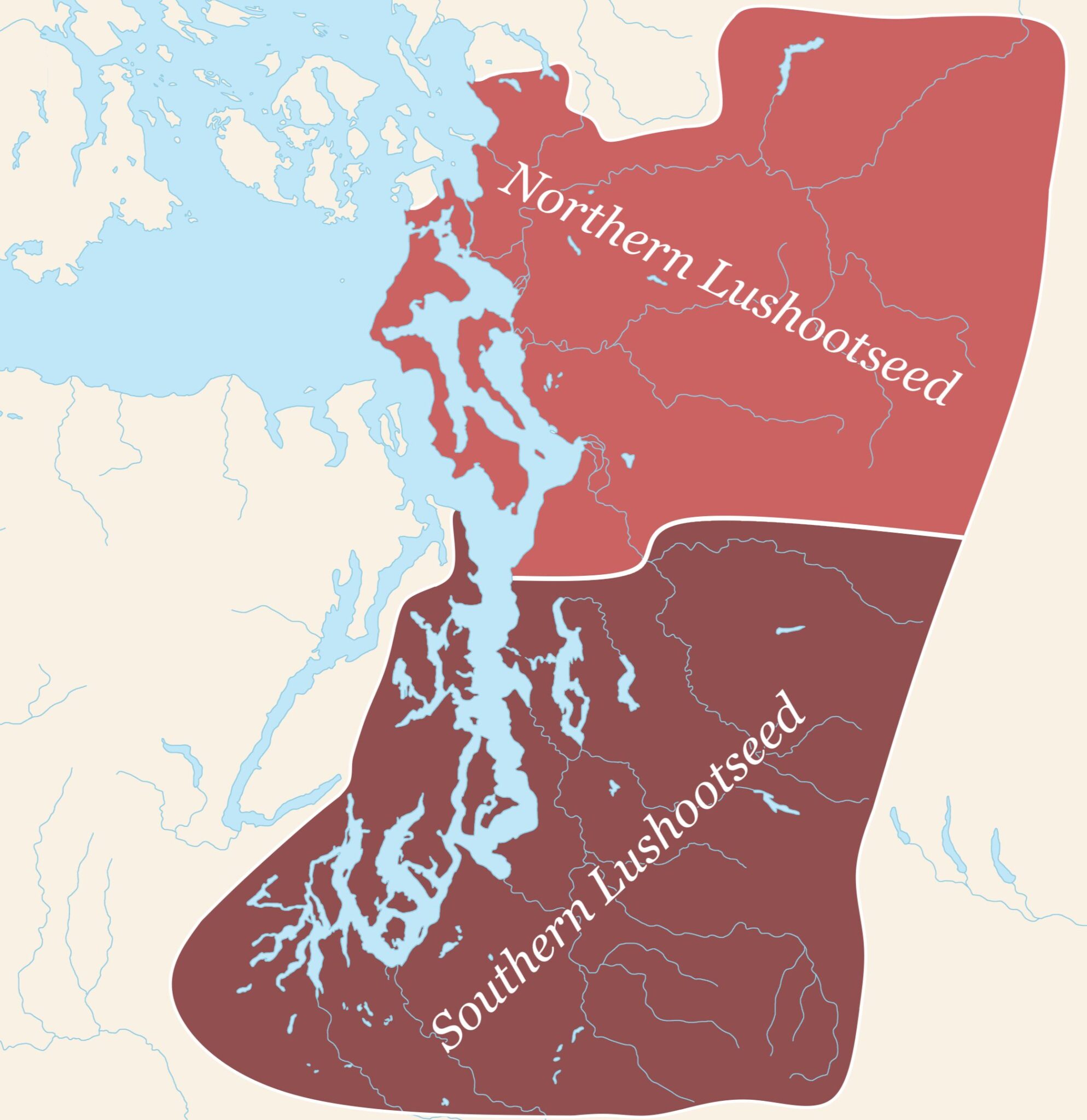
Interesting fact:
Lushootseed is an ancestral language spoken by 13 tribes in the Puget Sound region of Washington state. Its phonetic beauty reflects the Pacific Northwest’s natural surroundings, with melodic qualities and a rich tonal system. The diverse consonant and vowel sounds evoke the region’s sonic landscape, mirroring the rhythm of winds, rivers, and birdsong, and carrying cultural and environmental significance.
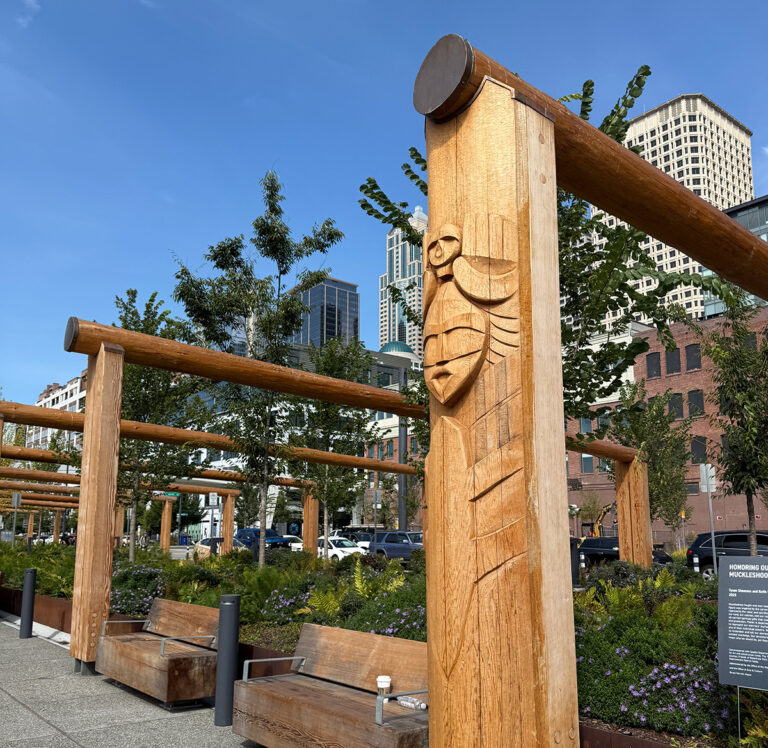 Photo: Tiina Vuorenmaa
Native Public Art
Drawing on his practice at the intersection of architecture and activism, sculptor Oscar Tuazon created To Our Teachers – deqʷaled, an art piece of carved house posts as a public space for learning. Located on the waterfront, from Columbia to Spring Street, the collaborative project involved carvers Randi Purser (Suquamish Tribe), Tyson Simmons (Muckleshoot Indian Tribe), and Keith Stevenson (Muckleshoot Indian Tribe). Nearby, three figures of Family, by Qwalsius-Shaun Peterson, stand near Pier 58, gazing upon the gravesite of Chief Si?al.
Additionally, a 16-foot A Salish Welcome statue by renowned artist of Quinault and Isleta-Pueblo heritage Marvin Oliver welcomes visitors to the Salmon Bay Nature Area near the Ballard Locks; and a life-size statue of Chief Si?al, designed by sculptor James Wehn and listed on the National Register of Historic Places, graces Tilikum Place, near Seattle Center.

Suquamish Museum
Grab a self-guided walking tour map to make the most of your visit to the Suquamish museum which honors the enduring cultural contributions of the Suquamish people. Plus, learn about nearby historical sites such as Chief Si?al’s gravesite, the House of Awakened Culture, and the Charles Lawrence Memorial Pole & Boat Ramp. Admission is free on the second Saturday of each month.
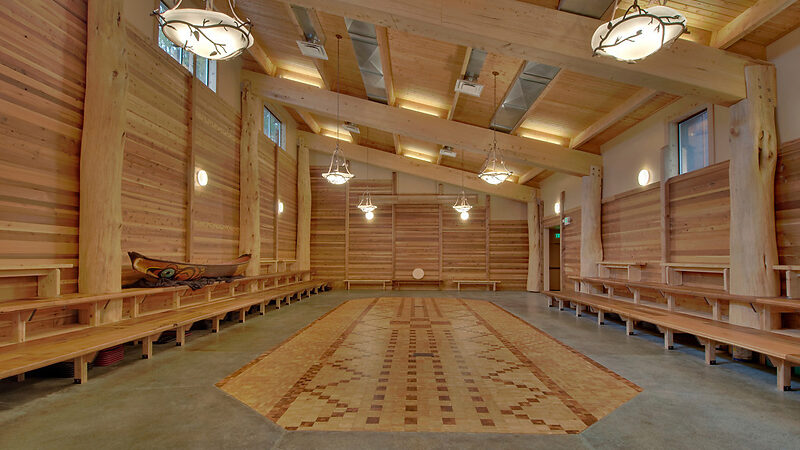
Duwamish Longhouse and Cultural Center
The Longhouse, reminiscent of ancient times, serves as a venue for tribal business and host cultural and educational events. Built with a traditional cedar post and beam structure, this center opened in 2009 and is the first new tribal longhouse constructed in Seattle in more than 150 years. Located near the mouth of the Duwamish River Valley, it continues the longhouse tradition of being a gathering place for celebrating cultural and social traditions. Admission is free.
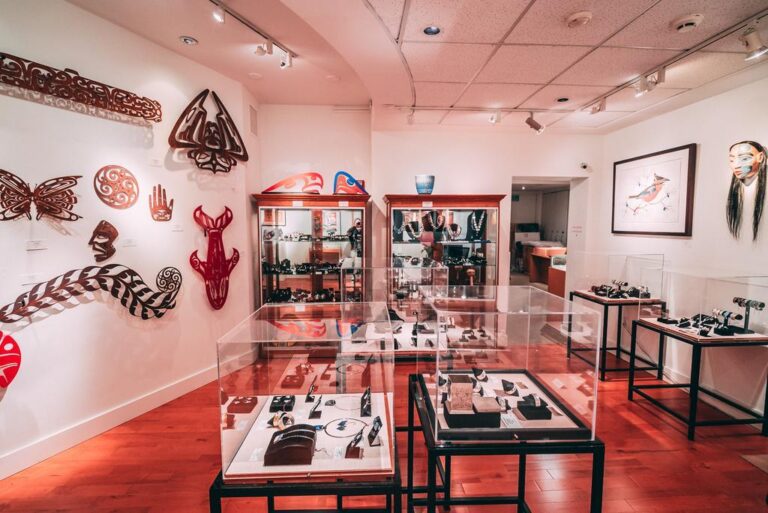 Stonington Gallery photo: Rudy Willingham
Shops and Galleries
Owned by the Snoqualmie Tribe and currently run by CEO Colleen Ecohawk (Pawnee and Athabascan Tribe), Eighth Generation offers exclusively Native designed visual art, wool blankets, home goods, and clothing. Nearby downtown, Stonington Gallery and Steinbrueck Native Gallery are dedicated to sharing work by Indigenous peoples of the Pacific Northwest coast. Started by virtual storyteller Matika Wilbur (Swinomish and Tulalip Tribe) with the mission of amplifying Indigenous creatives, Tidelands is an Indigenous-owned creative space with rotating exhibits and events, a production studio, and a boutique offering art, clothing, and more.
Hibulb Cultural Center & Natural History Preserve
Located about an hour north of Seattle, the Hibulb Cultural Center & Natural History Preserve is an interactive cultural center committed to highlighting and preserving the legacy of the Tulalip people through its multiple exhibits, longhouse, research library, and gift shop.

Special Events
June
Indigenous People Festival
This free event, held annually at Seattle Center, the Indigenous People Festival celebrates Native culture through song, dance, performances, food, and the sharing of indigenous knowledge.
July
Seafair Indian Days Powwow
This annual powwow at Daybreak Star Indian Cultural Center in Discovery Park celebrates Native culture with traditional tribal dance, food, music, and art.
July and August
Tribal Canoe Journey
Each year, different tribes in the U.S. and Canada host canoe families from tribal nations as they travel through ancestral waterways. This journey culminates in a week-long celebration at the destination village or tribal community, complete with songs, dances, and stories.
August
Chief Seattle Days
Hosted by the Suquamish Tribe, Chief Seattle Days honors Chief Si?al, the namesake of the city, for his accomplishments, including forging alliances between neighboring Coast Salish tribes, signing the 1855 Treaty of Point Elliott, and giving powerful speeches about environmental stewardship and the significance of having a deep connection to the land. The free programming includes a gravesite honoring ceremony, powwow, and salmon bake.
September
Salmon Homecoming
Hosted by the Salmon Homecoming Alliance nonprofit, the Salmon Homecoming is a time-honored tradition that celebrates the return of salmon to local waters and highlights the cultural significance of salmon to the Pacific Northwest’s Native American tribes. The celebration often features educational outreach activities, salmon bakes, and more.
October
Indigenous Peoples’ Day Celebrations
Celebrated on the second Monday of October, Indigenous Peoples’ Day is designed to recognize, honor, and celebrate the contributions of Native peoples through community-led events.
November
Native American Heritage Month
This federally recognized month is celebrated each November to honor the cultures, histories, and contributions of Native American and Alaska Native communities across the United States, helping ensure their rich histories and contributions continue to thrive with each passing generation.
Did You Know?
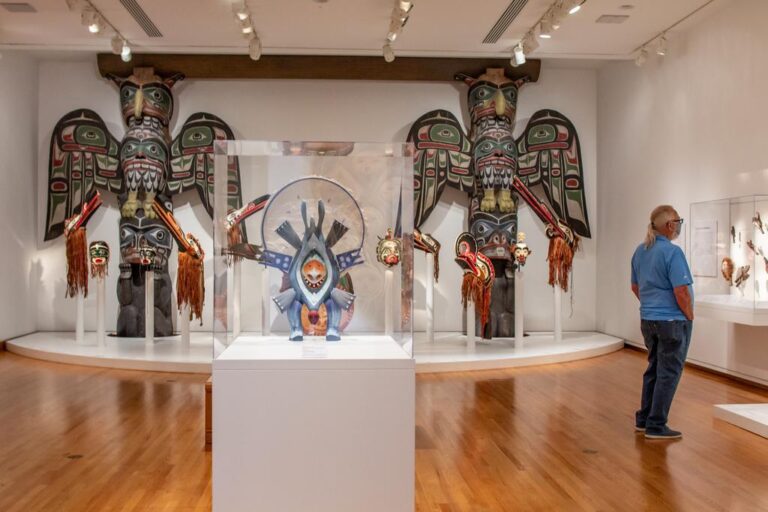 courtesy Seattle Art Museum
- Washington state is home to 29 federally recognized tribes, including the Yakama, Tulalip, Lummi, Makah, and Quinault Nations.
- Many places around Seattle, from beaches to hiking trails, contain archaeological artifacts made by Native people, including:
- həʔapus Village Park & Shoreline Habitat (formerly Terminal 107 Park),
- the old-growth forests and trails at Schmitz Preserve Park,
- and Daybreak Star Indian Cultural Center in Magnolia Park.
- Note: All archaeological sites are protected by law, and artifacts may not be disturbed or removed from public or private lands.
- As sovereign nations, Indian tribes in the U.S. have the right to regulate gaming on their reservations. There are more than two dozen tribal casinos in Washington, many of which feature displays of contemporary Coast Salish artwork.
Discover More of Seattle's Rich Cultural Heritage


Subscribe to the Seattle Localist
Seattle’s best every month in your inbox
Book Your Trip

Advertisements